Last updated: October 2026
Papad is eaten with meals across India and sold in every grocery shop. It is a low-investment, low-risk business that can start at home and grow into a small unit. Many women's groups across India have built strong papad brands, which shows the model works.
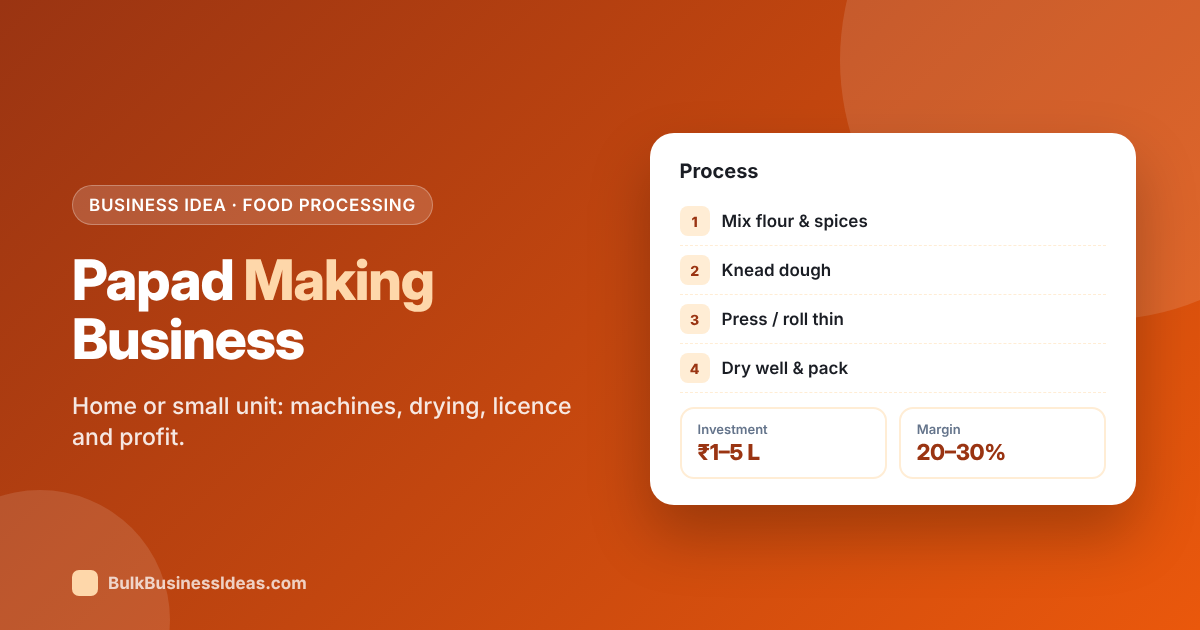
Quick Facts Investment₹1–5 lakh (manual/semi-auto); ₹10–20 lakh (automatic line) SpaceHome or 300–800 sq ft + drying area Main licencesFSSAI, Udyam; GST and Legal Metrology as you grow Typical margin20–30% Best forHome entrepreneurs, women's self-help groups
Types of Papad
- Urad dal papad: the most common, plain or with pepper, garlic or jeera
- Moong dal papad
- Rice papad and sabudana papad, popular in summer and for fasting
- Potato and nachni (ragi) papad: regional and health variants
- Mini and disco papad: for hotels and snacks
Machines and Setup
- Dough kneader / mixer: for consistent dough
- Papad pressing machine: manual or semi-automatic, or a fully automatic sheeting and cutting line
- Dryer: sun drying on clean racks, or a tray dryer for all-season production
- Packing: sealer, weighing scale, printed pouches
Process
- Mix the flour with salt, spices and papad khar (alkali), plus water.
- Knead into a firm, smooth dough.
- Make small balls and press or roll them thin.
- Dry until crisp (moisture must be low for long shelf life).
- Count or weigh and pack in airtight pouches.
Drying is the Key
Most quality problems come from poor drying: fungus, bad smell and a short shelf life. Sun drying is free but needs clean, covered racks protected from dust and birds. A tray dryer lets you produce during monsoon and gives consistent quality.
Licences
- FSSAI registration or licence (needed even for home production)
- Udyam registration
- GST when required (GST guide)
- Legal Metrology registration for packed goods
Simple Profit Example (Monthly, Small Unit) Sales: 1,200 kg at ₹160/kg (wholesale)₹1,92,000 Raw material (dal flour, spices, oil, khar): ₹85/kg– ₹1,02,000 Packaging: ₹10/kg– ₹12,000 Labour, power, rent– ₹35,000 Profit before tax₹43,000
Indicative only. Retail packs and speciality flavours give better margins than plain wholesale papad.
How to Sell
- Kirana shops and supermarkets (through local distributors)
- Hotels, dhabas, caterers and wedding caterers (bulk mini papad)
- Housing societies, exhibitions and melas
- Online marketplaces and your own Instagram page
- Combo packs with pickles (see Pickle Making Business)
Funding
A papad unit fits a Mudra Shishu or Kishore loan. Women's self-help groups may get support under PMFME and state livelihood missions (check current status). See Government Schemes for MSMEs.
Common Questions Can I start papad making from home?
Yes, with an FSSAI registration and a clean, dust-free drying space.
How much does a papad machine cost?
Manual and semi-automatic pressing machines are affordable for small units. Fully automatic lines cost much more and suit higher volumes.
How long does papad last?
Well-dried and properly packed papad usually lasts several months. Print a best-before date based on your own testing.
Disclaimer: Costs and profits are indicative examples and vary by location, scale and market prices. Verify licences and scheme rules with the relevant authorities.
Comments (0)
Login to leave a comment.
No comments yet. Be the first to share your thoughts.