Last updated: October 2026
Every household buys washing powder regularly, and so do laundries, hotels, hostels and hospitals. A small detergent unit using the dry-mix method needs simple machines and modest investment. The real challenge is not making the powder; it is selling against big brands. Smart small makers win in local markets and institutional supply.
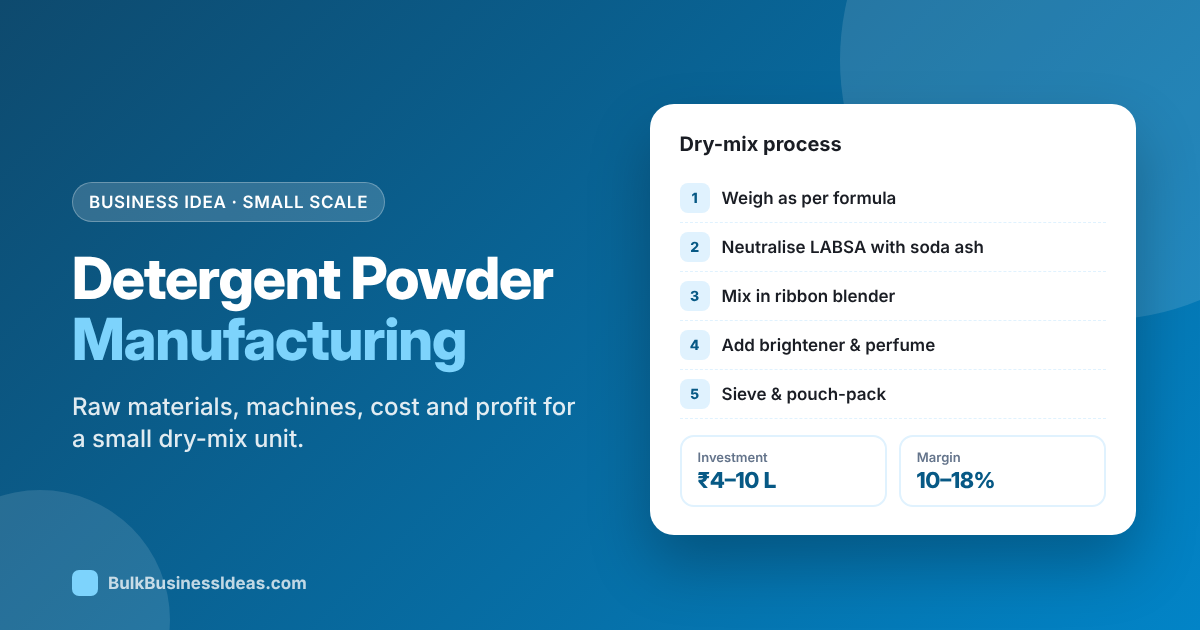
Quick Facts Investment₹4–10 lakh Space800–1,500 sq ft ProcessDry mixing (no boiler or spray-drying needed) Typical margin10–18% Best forPeople with distribution or institutional sales contacts
Main Raw Materials MaterialRole LABSA (acid slurry)Main cleaning agent (surfactant) Soda ashNeutraliser and builder; helps in hard water Sodium sulphateFiller and flow agent Zeolite / STPPBuilder (softens water) Sodium silicate, CMCAnti-redeposition, protects machines Optical brightener, perfume, colour specklesWhiteness, fragrance, look
Tip: Develop and test your formula with a chemical consultant or supplier. Washing performance and fragrance decide repeat sales.
Machines
- Ribbon blender / mixer: the main machine
- Sieve / sifter
- Pouch packing machine: automatic filling and sealing
- Weighing scales, band sealer, safety gear (gloves, masks, goggles)
Process (Dry-Mix Method)
- Weigh all ingredients as per the formula.
- Neutralise LABSA with soda ash in the mixer, following safe handling steps.
- Add the fillers, builders and other ingredients and mix evenly.
- Add brightener, colour speckles and perfume at the end.
- Let it cure or cool, then sieve.
- Pack in 500 g, 1 kg and bulk bags.
Licences
- Udyam and GST registration (GST guide)
- Legal Metrology packer registration: required for selling packed goods
- Trademark for your brand
- Local body trade licence; Pollution Control Board consent if applicable in your state
- BIS certification (IS 4955 for synthetic detergent powder): optional for many sales, useful for government and institutional tenders
Simple Profit Example (Monthly) Sales: 10,000 kg at ₹62/kg (to distributors)₹6,20,000 Raw material (₹42/kg) + packaging (₹6/kg)– ₹4,80,000 Labour, power, rent, transport– ₹60,000 Profit before tax and EMI₹80,000
Indicative only. Chemical prices change often, so review your costing every month.
How to Compete with Big Brands
- Institutional supply: laundries, hotels, hospitals, hostels and housing societies (bulk packs, regular orders)
- Local distribution: rural and semi-urban kirana shops with better retailer margins than big brands
- Range: add liquid detergent, dishwash powder or liquid, phenyl and floor cleaner using the same customers
- Value packs and schemes for retailers
- Government tenders through GeM (see Government Tenders for Small Businesses)
Funding
A detergent unit fits a Mudra Kishore or Tarun loan or PMEGP. See Government Schemes for MSMEs.
Safety First
LABSA is acidic and caustic materials can burn skin. Train workers, use protective gear, keep water and a first-aid kit nearby, and store chemicals safely.
Common Questions Can I make detergent powder at home?
Small trial batches are possible, but commercial production should be in a proper unit with ventilation, safety gear and licences.
Is BIS mandatory for detergent?
It is usually optional for regular sales, but tenders and some institutional buyers ask for it.
What else can I make with the same setup?
Dishwash powder, cleaning powders and, with small additions, liquid detergent and phenyl.
Disclaimer: Costs, formulas and rules are indicative. Follow chemical safety guidelines and confirm licences with local authorities.
Comments (0)
Login to leave a comment.
No comments yet. Be the first to share your thoughts.