Last updated: October 2026
India grows huge amounts of onion, garlic, tomato and leafy vegetables, and a lot goes to waste or sells cheap at harvest. A dehydration unit removes the water from vegetables, turning them into flakes and powders that last 12 months or more. Buyers include food factories, namkeen and instant-food makers, hotels and exporters.
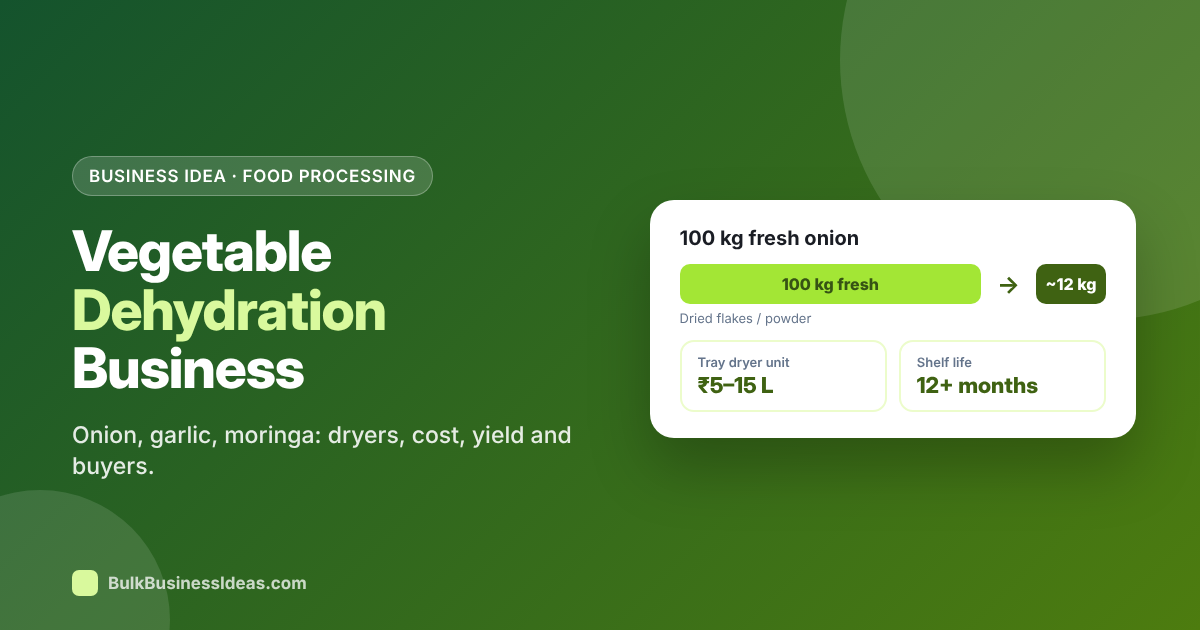
Quick Facts Investment₹5–15 lakh (tray dryer unit); ₹50 lakh+ for belt dryer plants Space800–1,500 sq ft YieldOnion about 12%; most vegetables 8–15% of fresh weight Main licencesFSSAI, Udyam, GST; IEC and APEDA for export Best forFarm-belt locations (e.g. Nashik, Pune, Satara for onion)
What Can You Dehydrate?
- Onion: flakes, chopped, minced, powder. The biggest demand.
- Garlic: flakes, granules, powder
- Moringa (drumstick) leaves: powder for the health market
- Tomato: powder for soups, snacks and seasoning
- Ginger, green chilli, carrot, beetroot, curry leaves, mint
Dryer Options DryerGood forNote Solar dryerVery small start, low running costWeather-dependent Electric / gas tray dryerSmall units (100–500 kg fresh a day)Most common for beginners Belt (continuous) dryerLarge plants, export volumesHigh investment
Process
- Sort and wash the fresh vegetables.
- Peel and slice to even thickness (a slicer machine gives uniform pieces).
- Pre-treat where needed (e.g. blanching for some vegetables).
- Dry at a controlled temperature until moisture is around 4–6%.
- Grind into powder if required, then sieve.
- Pack immediately in moisture-proof, airtight packaging.
Machines List
- Washing machine / tanks
- Peeler and slicer
- Tray dryer (with trays and trolleys)
- Pulverizer (for powder)
- Sifter
- Sealing / packing machine, moisture meter, weighing scale
Licences
- FSSAI licence
- Udyam registration and GST
- Legal Metrology registration for retail packs
- For export: Import Export Code (IEC) and APEDA registration
Simple Profit Example (Monthly, Onion Flakes)
Drying 500 kg of fresh onion a day for 25 days = 12,500 kg fresh onion.
Output (12%): 1,500 kg flakes at ₹200/kg₹3,00,000 Fresh onion: 12,500 kg at ₹14/kg– ₹1,75,000 Power/fuel, labour, packaging– ₹65,000 Profit before tax and EMI₹60,000
Indicative only. Powders and health products (moringa, garlic powder) usually earn better margins than plain onion flakes.
Who Buys Dehydrated Vegetables?
- Namkeen, soup, noodle and instant-food manufacturers
- Spice and seasoning companies
- Hotels, caterers, cloud kitchens and the armed forces (through tenders)
- Exporters, or direct export once you are registered
- Retail and online (moringa powder, tomato powder) under your own brand
Government Support
Dehydration units can use PMEGP, a CGTMSE-backed bank loan, and food processing support like PMFME (check current status). State horticulture departments sometimes support post-harvest units. See Government Schemes for MSMEs.
Tips for Success
- Buy fresh produce in season when prices are lowest, since raw material is your biggest cost
- Control moisture strictly. Damp product forms lumps and fungus.
- Get samples tested at a food lab. Buyers ask for test reports.
- Connect with farmer groups (FPOs) for steady supply
Common Questions How much dried onion do I get from 100 kg of fresh onion?
Roughly 10–14 kg, depending on the onion's water content.
Can I start with a solar dryer?
Yes, for testing products and small orders. Move to an electric or gas tray dryer for steady supply.
Is export necessary to make money?
No. The domestic food industry buys a lot. Export adds margin once your quality is consistent.
Disclaimer: Costs and profits are indicative examples and vary by location, scale and market prices. Verify licences and scheme rules with the relevant authorities.
Comments (0)
Login to leave a comment.
No comments yet. Be the first to share your thoughts.