Last updated: October 2026
A plastic recycling unit buys plastic scrap, cleans it, and turns it into granules (pellets) that factories use to make buckets, pipes, bags and more. Rules under the Plastic Waste Management Rules now push brands to use recycled plastic and fund recycling through EPR (Extended Producer Responsibility). That creates an extra income source for registered recyclers.
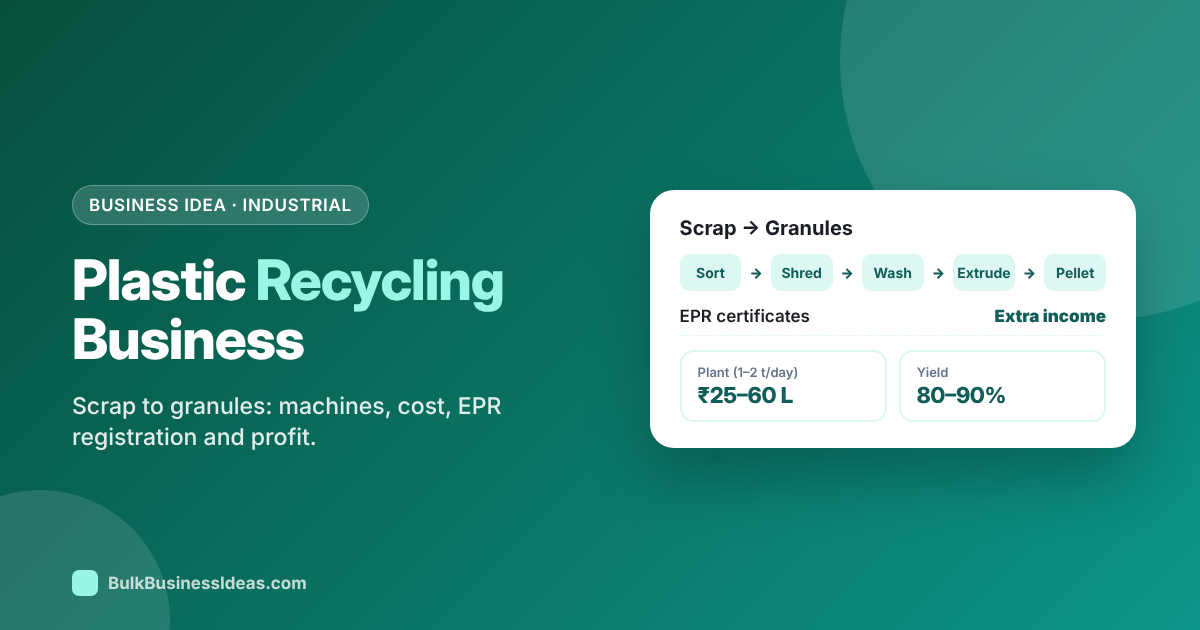
Quick Facts Investment₹25–60 lakh (washing + granule line, about 1–2 tonnes/day) Space3,000–6,000 sq ft in an industrial area YieldAbout 80–90% granules from sorted scrap Must-have registrationsPollution consent + CPCB EPR portal registration Best forPeople with scrap trade contacts; industrial-area locations
Which Plastics Are Recycled?
- LDPE / LLDPE: films, carry bags, packaging. Most common.
- HDPE: cans, drums, crates, bottles
- PP: woven sacks, containers, caps
- PET: bottles, usually processed into flakes in separate specialised plants
Tip: Start with one or two types you can source steadily. Mixed plastic gives poor-quality granules.
Process
- Collect and sort scrap by type and colour.
- Shred or grind into small pieces.
- Wash to remove dirt, labels and oil.
- Dry the material.
- Agglomerate films into small lumps (for LDPE film).
- Extrude: melt, filter and push the plastic through a die.
- Cool and cut into granules, then pack in 25 kg bags.
Machines
- Shredder / grinder
- Washing line (tanks, friction washer)
- Dryer
- Agglomerator (for films)
- Extruder with screen changer
- Water cooling tank and granule cutter
Electricity is a big running cost, so plan for the right industrial connection.
Registrations and Compliance
- State Pollution Control Board: Consent to Establish and Consent to Operate. Recycling units need proper water and air pollution controls.
- CPCB centralised EPR portal: register as a Plastic Waste Processor. Registered processors can generate EPR certificates that producers and brand owners buy to meet their obligations. This is an additional revenue stream.
- Udyam and GST registration
- Factory licence, fire NOC and industrial land as required
Simple Profit Example (Monthly, LD Granules)
Processing 1.5 tonnes of sorted scrap a day for 25 days = 37,500 kg.
Granules (85%): 31,875 kg at ₹48/kg₹15,30,000 Scrap: 37,500 kg at ₹30/kg– ₹11,25,000 Power, labour, water, transport– ₹3,00,000 Profit before tax and EMI₹1,05,000
Indicative only, and before any EPR certificate income. Scrap and granule rates move with virgin plastic prices.
Buyers
- Plastic product makers: buckets, mugs, pipes, crates, garbage bags, chairs
- Film blowing units (for LDPE granules)
- Traders and granule dealers
- Brand owners needing recycled content and EPR credits
Funding
A recycling plant can use PMEGP (within its project limit), a CGTMSE bank loan for machinery, and a cash credit limit for scrap stock. See MSME Loan Options.
Key Risks
- Inconsistent scrap quality. Build reliable supplier networks.
- Pollution compliance. Never run without consent and proper effluent handling.
- Price swings linked to virgin plastic prices
Common Questions Is plastic recycling profitable?
Yes, with steady scrap supply, good sorting and full compliance. EPR certificates add income for registered processors.
Do I need pollution clearance?
Yes. Plastic recycling needs State Pollution Control Board consent. Running without it can lead to closure.
Can I start with just a grinder?
Yes. Some start by grinding and washing scrap ("regrind") and selling it to granule makers, then add extrusion later.
Disclaimer: Costs, prices and rules are indicative and change over time. Confirm compliance with your State Pollution Control Board and the CPCB EPR portal.
Comments (0)
Login to leave a comment.
No comments yet. Be the first to share your thoughts.