Last updated: October 2026
Mushrooms grow indoors, need very little land and give a crop in weeks, not months. You can start oyster mushroom farming in a single room with low investment, and later move to button mushroom with a climate-controlled unit. Demand is growing from hotels, restaurants, supermarkets and health-conscious families.
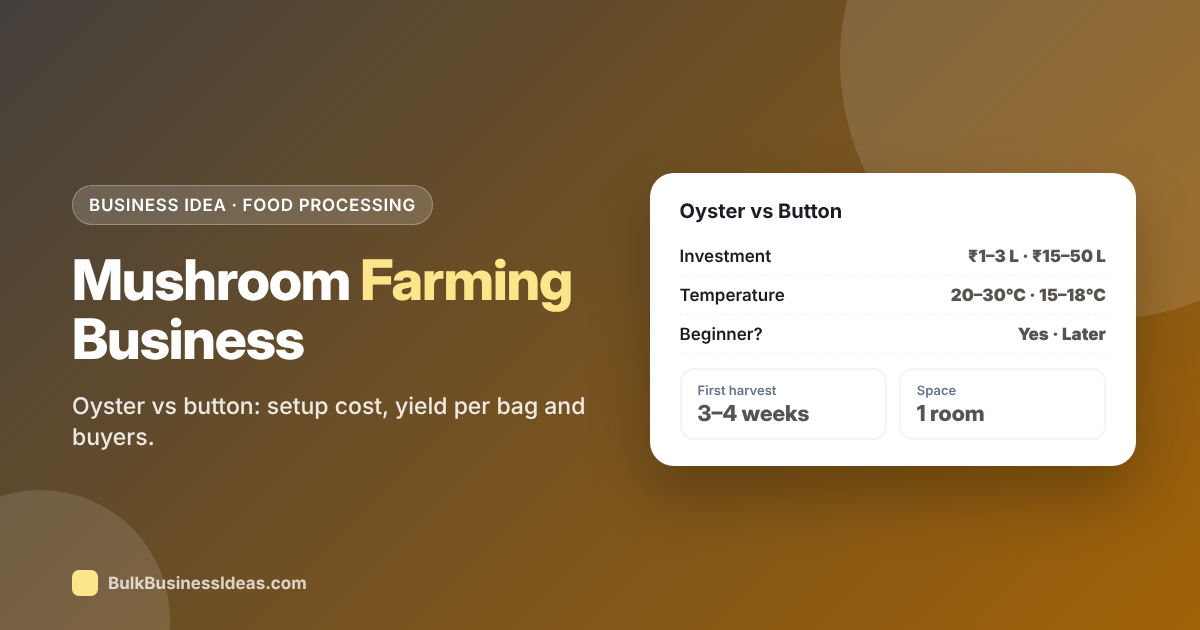
Quick Facts InvestmentOyster: ₹1–3 lakh; Button (AC unit): ₹15–50 lakh SpaceOne room of 300–500 sq ft for oyster First harvestAbout 3–4 weeks after spawning (oyster) TrainingStrongly recommended (KVK, agricultural universities) Best forFarmers, rural youth, women's groups, small-space entrepreneurs
Oyster vs Button Mushroom Oyster (Dhingri)Button InvestmentLowHigh Temperature20–30°C, suits most of IndiaNeeds 15–18°C (AC) Growing materialWheat or paddy strawPrepared compost MarketGrowing; also sold driedLargest demand in cities Best for beginners?YesAfter experience
Oyster Mushroom Setup (Beginner)
- A clean room with windows or exhaust, racks or hanging ropes
- Straw (wheat or paddy), chopped and disinfected
- Spawn (mushroom seed) from a certified lab
- Polythene bags, a sprayer, and a humidifier or foggers
- A thermometer and hygrometer to check temperature and humidity
Growing Steps (Oyster)
- Chop the straw and soak it in water with disinfectant (or hot water).
- Drain to the right moisture.
- Fill bags in layers of straw and spawn.
- Keep the bags in the dark for spawn run (about 2–3 weeks) until white growth covers them.
- Open or cut the bags, give light and maintain humidity with water spray.
- Harvest in 2–3 flushes over the next few weeks.
Simple Profit Example (One Oyster Cycle)
1,000 bags, each yielding about 0.8 kg of fresh mushrooms over the cycle.
Output: 800 kg at ₹120/kg (wholesale)₹96,000 Bags, straw, spawn, chemicals (about ₹40/bag)– ₹40,000 Labour, power, transport– ₹15,000 Profit per cycle₹41,000
Indicative only. Running several staggered batches a year multiplies this. Selling dried oyster mushroom or value-added products (pickle, powder) increases margin.
Where to Sell
- Vegetable wholesalers and APMC markets
- Hotels, restaurants and cloud kitchens (fresh daily supply)
- Supermarkets and local vegetable vendors
- Direct to customers through WhatsApp groups in housing societies
- Dried mushroom and mushroom powder online
Important: Fresh mushrooms spoil in 2–3 days, so line up buyers before your first harvest.
Licences
- Growing fresh mushrooms usually needs no special licence. Check with your local gram panchayat or municipal body.
- For packed, dried or processed products: FSSAI registration or licence
- Udyam registration for loans and schemes
Training and Subsidy
- Training: Krishi Vigyan Kendras (KVKs), agricultural universities and ICAR's Directorate of Mushroom Research run short courses.
- Subsidy: State horticulture departments support mushroom units under the Mission for Integrated Development of Horticulture (MIDH). Rates differ by state.
- Loans: Mudra or PMEGP. See Government Schemes for MSMEs.
Common Mistakes
- Poor hygiene, which leads to contamination (green mould) and bag losses
- Buying cheap, uncertified spawn
- Growing before finding buyers
Common Questions Can I grow mushrooms at home?
Yes. Oyster mushrooms can be grown in a spare room for learning. Commercial scale needs a dedicated room with humidity control.
Which mushroom is most profitable?
Button sells the most in cities, but oyster is cheaper to start and less risky for beginners.
Where do I buy spawn?
From agricultural universities, KVKs or licensed spawn labs. Ask local growers for reliable sources.
Disclaimer: Costs and profits are indicative examples and vary by location, scale and market prices. Verify licences and scheme rules with the relevant authorities.
Comments (0)
Login to leave a comment.
No comments yet. Be the first to share your thoughts.