Last updated: October 2026
Lakdi ghana (wooden ghani) is the traditional way of pressing oil: a slow-turning wooden pestle crushes seeds without heating them much. Health-conscious families now pay a premium for this "wood-pressed" or "cold-pressed" oil. A small unit with 2–3 ghanis can be started in a shop space and sold directly to customers.
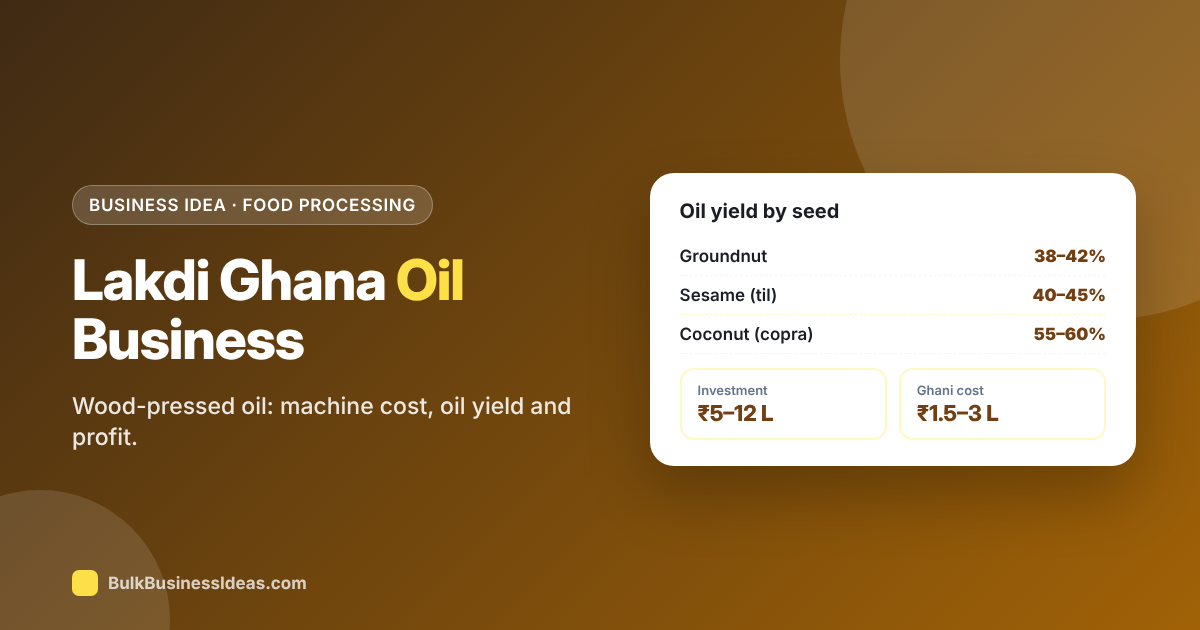
Quick Facts Investment₹5–12 lakh (2 ghanis + filter + bottling) Space400–800 sq ft (a shop works well because customers like to see it) CapacityAbout 80–120 kg seed per ghani per day Main licencesFSSAI, Udyam, GST, Legal Metrology Best forUrban and semi-urban areas with health-conscious buyers
Oils You Can Press SeedApprox. oil yieldNote Groundnut (kernels)38–42%Highest demand Sesame (til)40–45%Premium price Coconut (copra)55–60%Strong in coastal and South markets Mustard30–35%North and East India Safflower, sunflower, almondVariesNiche products
The leftover oil cake sells well as cattle feed and is a valuable second income.
Setup and Machines
- Motorised wooden ghani (usually made of vaagai or babool wood). The core machine.
- Filter press or natural settling tanks
- Seed cleaner (and a small roaster for sesame, if used)
- Bottle filling and capping setup, labels, weighing scale
- Stainless steel storage drums
Process
- Clean the seeds and remove stones and bad seeds.
- Load the ghani. Some makers add a little jaggery, a traditional step for certain oils.
- Press slowly for about 1–1.5 hours per batch.
- Collect the oil and let it settle or pass it through a filter.
- Fill bottles and label them with batch, date and MRP.
Licences
- FSSAI licence. Edible oil labels must follow FSSAI labelling rules, and honest "cold-pressed" claims matter.
- Udyam and GST registration
- Legal Metrology packer registration
- Shop and Establishment registration from your local body
Simple Profit Example (Monthly, Groundnut Oil)
2 ghanis pressing 100 kg each a day for 25 days = 5,000 kg groundnut kernels.
Oil (38%): about 2,000 litres at ₹330/litre₹6,60,000 Oil cake: about 3,000 kg at ₹40/kg₹1,20,000 Groundnut kernels: 5,000 kg at ₹110/kg– ₹5,50,000 Bottles, labels, labour, power, rent, marketing– ₹1,20,000 Profit before tax and EMI₹1,10,000
Indicative only. Selling more at retail (instead of wholesale) and adding sesame and coconut oil improves margins.
How to Sell
- Live pressing in a shop: customers trust what they see
- Subscriptions for housing societies, with monthly home delivery
- Organic stores, health stores and supermarkets
- WhatsApp, Instagram and your own website
- Bulk supply to restaurants that advertise "cooked in wood-pressed oil"
Funding
A ghani unit fits a Mudra loan or PMEGP. Food schemes like PMFME may apply (check current status). See Government Schemes for MSMEs.
Things to Watch
- Seed quality: old or fungus-hit seeds spoil taste and safety
- Shelf life: unrefined oil has a shorter shelf life, so sell fresh batches and use proper bottles
- Honest labelling: never mix in refined oil. One bad review can kill a local brand.
Common Questions Is lakdi ghana oil the same as cold-pressed oil?
Wood-pressed is a type of cold pressing, done with a slow wooden ghani. Many brands use both terms. Explain your process honestly on the label.
How much does a wooden ghani machine cost?
Roughly ₹1.5–3 lakh per motorised ghani, depending on capacity and maker.
Can I run it from a small shop?
Yes. Many successful units run from a 400–600 sq ft shop with live pressing on display.
Disclaimer: Costs and profits are indicative examples and vary by location, scale and market prices. Verify licences and scheme rules with the relevant authorities.
Comments (0)
Login to leave a comment.
No comments yet. Be the first to share your thoughts.