Last updated: October 2026
India is one of the world's biggest processors and consumers of cashew. A processing unit buys raw cashew nuts (RCN), removes the hard shell and skin, and sells clean kernels by grade. It is a proven business in cashew belts like Konkan (Sindhudurg, Ratnagiri), Goa, Kerala, Karnataka and Odisha. Note that it needs a lot of working capital, because raw nuts are bought in season and stocked.
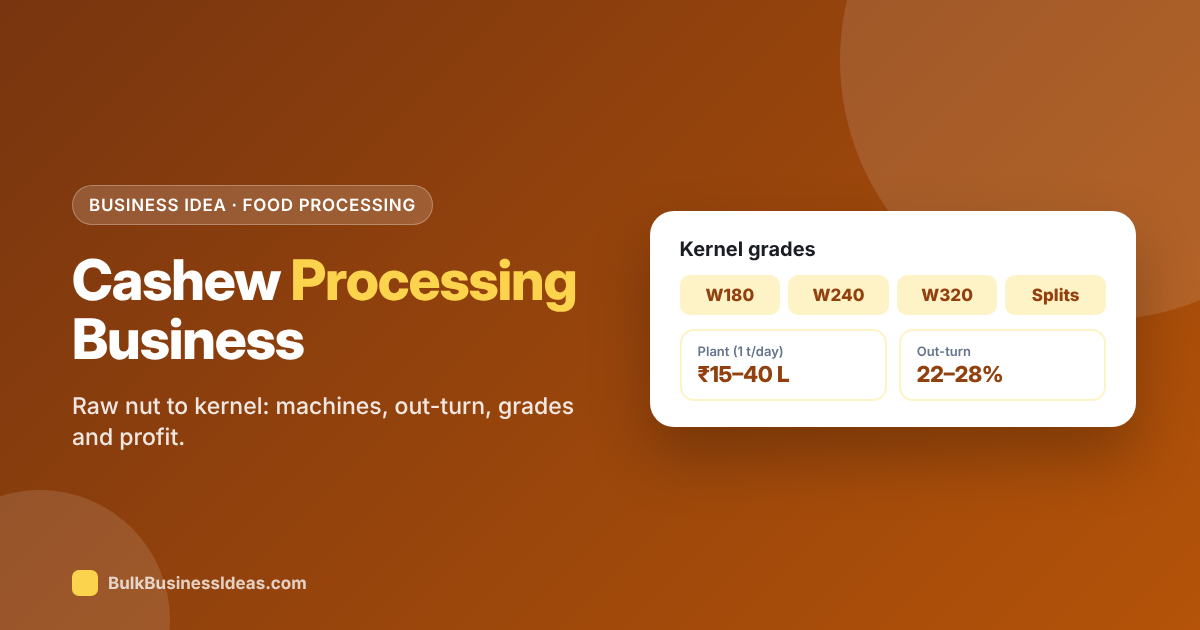
Quick Facts Investment₹15–40 lakh (semi-automatic, about 1 tonne RCN/day) plus working capital Space2,500–5,000 sq ft + storage Out-turn (yield)About 22–28% kernels from raw nuts LabourHigh; peeling and grading need many hands Best forCashew-growing regions with available local labour
Processing Steps
- Drying and storing raw nuts (moisture control prevents damage).
- Grading raw nuts by size.
- Steam cooking (or roasting) to make the shell brittle.
- Shelling / cutting: removing the outer shell with cutting machines.
- Drying (borma): drying the kernels to loosen the skin.
- Peeling: removing the thin brown skin (machine plus hand finishing).
- Grading: sorting kernels into whole and broken grades (like W180, W240, W320, splits, pieces).
- Packing: vacuum or nitrogen-flushed packing in tins or pouches.
Machines Needed
- Raw nut grader
- Steam boiler and cooker
- Shelling / cutting machines (pedal-operated or automatic)
- Shell–kernel separator
- Borma dryer
- Peeling machine
- Kernel grading machine
- Vacuum packing machine
Grades Matter
Whole kernels (W180, W210, W240, W320) fetch the highest price. Splits, butts and pieces sell lower. Your profit depends heavily on reducing breakage during cutting and peeling, so trained workers and well-set machines pay for themselves.
Licences
- FSSAI licence
- Udyam and GST registration
- Pollution Control Board consent (boiler and shell handling)
- Boiler registration, if your boiler falls under the boiler regulations
- Factory licence (usually applies given the labour strength)
- For export: IEC and registration with the Cashew Export Promotion Council (CEPCI)
Simple Profit Example (Monthly)
Processing 1,000 kg of raw nuts a day for 25 days = 25,000 kg RCN.
Kernels (25%): 6,250 kg at an average ₹600/kg (mixed grades)₹37,50,000 Shells (sold for oil / fuel)₹50,000 Raw nuts: 25,000 kg at ₹120/kg– ₹30,00,000 Labour, fuel, power, packing, transport– ₹4,50,000 Profit before tax and interest₹3,50,000
Indicative only. Raw nut prices and kernel rates change every season. Interest on working capital can be significant.
Who Buys Cashew Kernels?
- Dry fruit wholesalers and traders
- Sweet shops, bakeries and ice-cream makers (splits and pieces)
- Your own retail brand: roasted, salted and flavoured cashews
- Exporters, or direct exports
Funding
A cashew unit can use PMEGP (new units), a CGTMSE bank loan for machinery, and a cash credit limit for stocking raw nuts. Food processing schemes like PMFME may apply (check current status). See MSME Loan Options.
Key Risks
- Raw nut price swings: buy in season and know your out-turn before buying (test a sample)
- Labour availability during peak season
- Breakage lowering your average selling price
Common Questions What is "out-turn" in cashew?
It is the kernel weight you get from a fixed quantity of raw nuts. Traders often quote it in pounds of kernel per 80 kg bag. Higher out-turn means better raw nuts.
Can I start small?
Yes. Small units start with hand or pedal cutters and grow into semi-automatic machines.
Is roasted and flavoured cashew a good add-on?
Yes. Retail packs of roasted and flavoured cashews give much better margins than plain bulk kernels.
Disclaimer: Costs and profits are indicative examples and vary by location, scale and market prices. Verify licences and scheme rules with the relevant authorities.
Comments (0)
Login to leave a comment.
No comments yet. Be the first to share your thoughts.